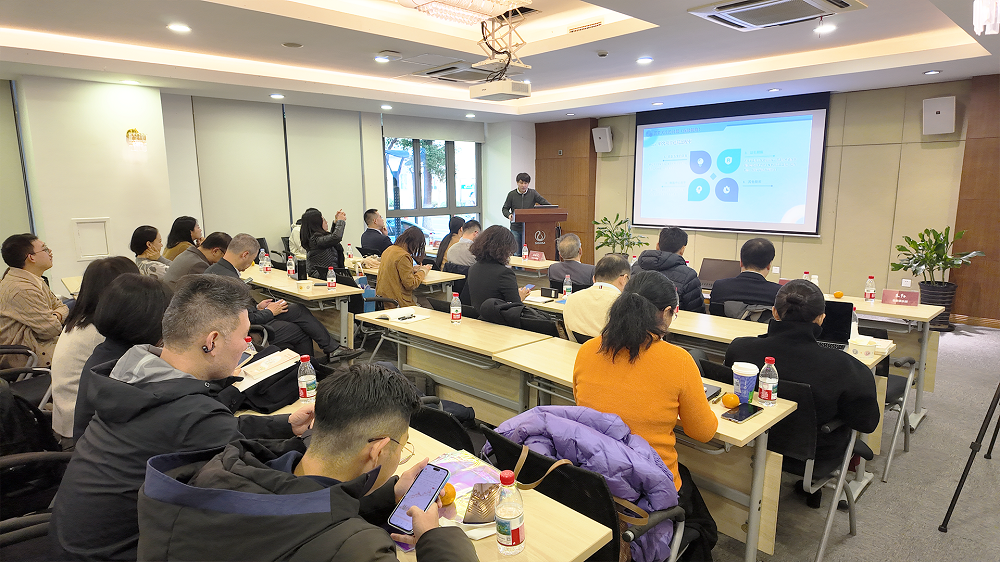
On December 5, 2025, the first Innovation Drug Salon was successfully held at the Haike Road Park of the Shanghai Institute of Materia Medica, Chinese Academy of Sciences. Guided jointly by the Alumni Association of Shanghai Institute of Materia Medica, Chinese Academy of Sciences and the Zhejiang Alumni Association of Central South University, this salon was co-hosted by Kaisi Club and Xinglin Fanzhou, with the support of Xingxiang Yaji and Kaisi Academy as co-organizers. With the theme of "Challenges and Opportunities in ADC Drug R&D", the event brought together many experts from academia, industry, clinical practice and insurance sectors, who conducted in-depth and forward-looking discussions on the entire industrial chain of ADC, ranging from target discovery, technology platforms, clinical development to risk management. The event was hosted by Zhu Zhengquan, Secretary-General of Kaisi Club.
At the beginning of the event, Dr. Zhu Qin, Vice President of the Alumni Association of Shanghai Institute of Materia Medica, Chinese Academy of Sciences, Distinguished Researcher of Shanghai Institute of Materia Medica, Chinese Academy of Sciences, and Chairman of Kaisi Club, pointed out in his speech that the R&D of ADC drugs embodies the complexity of the entire chain from basic research to clinical translation. Only by deeply integrating the forces of "industry-university-research" can we traverse the "last mile" of new drug creation. He highly affirmed the complementary advantages with Xiangya School of Medicine, Central South University, and expressed the expectation that the "Innovation Drug Salon" would become an efficient dialogue bridge connecting "laboratory-clinic-industry".
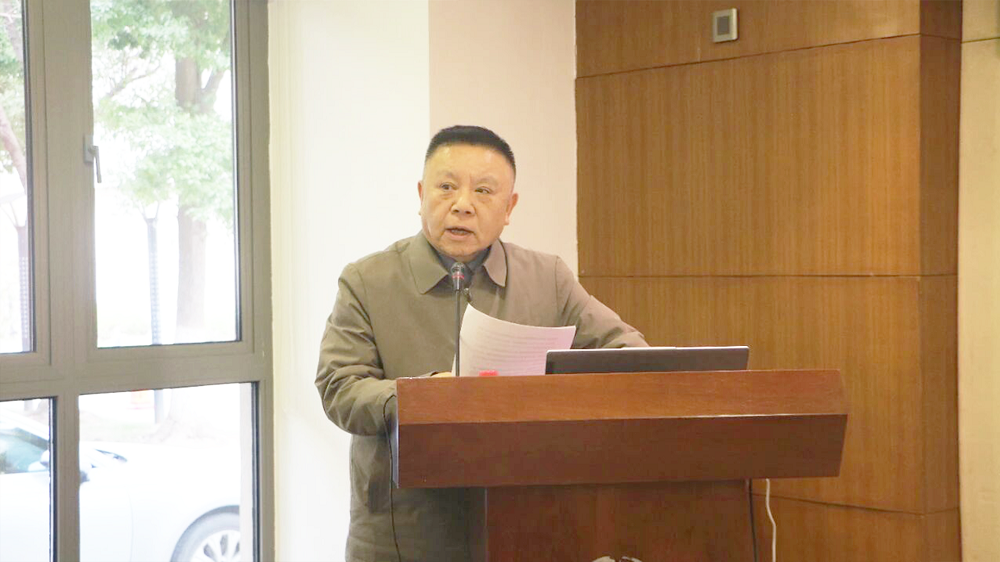
Mr. Ji Lingxing, Executive President of the Zhejiang Alumni Association of Central South University, Deputy Secretary-General of the General Alumni Association of Central South University, and Chairman of Xingxiang Yaji, attended the event and delivered a speech on behalf of the guiding units. He emphasized that ADC drugs carry the important mission of China's pharmaceutical innovation from "following" to "keeping pace" and even "leading the way". He hoped that through the integration of the salon platform, the clinical resources of Xiangya School of Medicine and the R&D accumulation of the Shanghai Institute of Materia Medica, Chinese Academy of Sciences, as well as the advantages of all parties, could be deeply integrated to help scientists and technical personnel jointly address R&D bottlenecks and promote the transformation of more achievements.

01 Keynote Speeches: A Panoramic Perspective on ADC R&D from Scientific Project Initiation to Clinical Practice
Speech 1: Scientific Logic and Future Directions for Differentiated Project Initiation of ADC Drugs

Dr. Huang Changjiang | Founder and Chief Scientist of TargetLink Biotech
As a top expert in ADC R&D, Dr. Huang Changjiang has over a decade of research experience in the field. He is the primary inventor of 15 granted patents and another 32 patent applications related to ADCs. He systematically elaborated on differentiated project initiation strategies based on the biological characteristics of tumors. Taking prostate cancer as an example, he pointed out that traditional ADCs based on microtubule inhibitors such as MMAE have limited efficacy in "slow-growing cancers", with the core reason being the low Ki-67 index and slow division of such cancer cells. He emphasized that future ADC development must conduct in-depth analysis of the molecular pathology of specific cancer types and select matching mechanisms of action accordingly—for instance, using topoisomerase I inhibitors like DXD (which induce irreversible DNA damage) to address "slow-growing cancers".
Dr. Huang further noted that differentiation is reflected not only in the choice of payloads but should also be extended forward to the optimization of targeting vectors. He shared the potential of bispecific antibody ADCs in improving tumor targeting and endocytosis efficiency, and put forward the forward-looking view that "multi-target, multi-payload" will be the key direction to overcome tumor heterogeneity and avoid drug resistance. The dual-payload ADC platform explored by his team aims to achieve more efficient and broader-spectrum anti-tumor effects through synergistic mechanisms, representing an important trend in next-generation ADC R&D.
Speech 2: Breakthroughs, Challenges and Clinical Trends of ADCs in Head and Neck Tumors

Dr. Chen Guangliang | Department of Medical Oncology, Fudan University Shanghai Cancer Center
Dr. Chen Guangliang started with the pressing clinical needs, pointing out that head and neck tumors feature complex anatomical structures and heavy functional burdens, and treatment methods are often accompanied by severe functional damage and reduced quality of life. Although immunotherapy has become the first-line standard, effective regimens are still lacking for second-line treatment, resulting in short survival periods for patients.
He systematically reviewed the breakthrough progress of ADCs in this field: for example, MRG003, an EGFR-targeting ADC, achieved an objective response rate (ORR) of 43% as a monotherapy in head and neck squamous cell carcinoma, significantly outperforming traditional cetuximab; in nasopharyngeal carcinoma, when combined with a PD-1 inhibitor, the ORR reached as high as 73.3%, demonstrating the strong potential of the "ADC + immunotherapy" regimen. Meanwhile, he warned that head and neck cancer patients have extremely poor tolerance to specific toxicities (such as oral mucositis, bleeding, and interstitial pneumonia), and safety is the "life-and-death line" for ADC R&D, which must be fully considered from the source of molecular design (linkers and payloads). Future trends will focus on biomarker-based precise stratification, exploration of novel combination therapies, and targeted development for rare subtypes (e.g., salivary gland cancer).
Speech 3: Glycan Site-Specific Conjugation Technology – An Innovative Platform for Enhancing ADC Homogeneity and Stability
Dr. Shi Wei | Head of PCC Screening Platform, Tangling Biotech; Associate Researcher, Shanghai Institute of Materia Medica, Chinese Academy of Sciences
Dr. Shi Wei focused on introducing DisacLink®, a glycan site-specific conjugation technology independently developed by his team. Through precise engineering modification of antibody glycosylation sites, this technology enables site-specific and quantitative conjugation of toxin small molecules to antibodies, thereby significantly addressing problems such as high heterogeneity and poor pharmacokinetic properties of ADC products caused by traditional random conjugation. He demonstrated how the Exatecan-ADC library built on this technology efficiently screens out superior molecules, and prospected the broad application prospects of the platform in developing antibody-oligonucleotide conjugates (AOCs) and complex dual-payload ADCs, providing a powerful tool for the "engineering" design and optimization of ADCs.
Speech 4: Risk Protection and Insurance Scheme Design for ADC Clinical Trials

Mr. Liu Yaqing | Deputy General Manager, Shanghai Pudong Wuxin Insurance Brokerage Co., Ltd.
With extensive experience in handling over 3,000 clinical trial insurance cases, Mr. Liu Yaqing provided an in-depth interpretation of the core value and design key points of insurance in ADC clinical trials. He emphasized that insurance is not only a compliance tool to meet ethical and regulatory requirements but also a stabilizer that transfers financial risks, properly addresses subject damages, eases doctor-patient conflicts, and ensures the smooth progress of research.
Through multiple real ADC insurance claim cases (such as blindness caused by ocular toxicity, death from severe pneumonia, hematological toxicity, etc.), he vividly analyzed the liability determination logic, negotiation process, and compensation principles in insurance claims. He specifically pointed out that scheme design should focus on key aspects: coverage scope (which should include "trial-related damages" rather than just "drug-related ones"), insurance term, rationality of coverage limits, and accuracy of relevant descriptions in the Informed Consent Form (ICF). His sharing provided highly actionable guidance for ADC R&D enterprises to build a sound risk management system.
Speech 5: Focus on a Popular Target: Clinical Development Strategy of Claudin 18.2 ADCs

Dr. Xie Hui | Senior Director of Clinical R&D, Ascentage Pharma
Dr. Xie Hui focused on Claudin 18.2, one of the most popular solid tumor targets today, and systematically analyzed the biological characteristics, competitive landscape, and current clinical development status of this target. Taking Ascentage Pharma’s ATG-022 as an example, he elaborated on how to achieve differentiated layout in the "red sea" of R&D for the same target, including optimizing molecular design, exploring more effective patient screening strategies, and designing sophisticated early-phase clinical studies to rapidly validate concepts and identify advantageous populations. His report provided a panoramic perspective on the clinical translation path of ADC projects, from target evaluation to implementation.
02 Roundtable Discussion: Forging Ecological Consensus to Build Global Competitiveness of China’s ADCs

Left 1: Dr. Xiao LiangLeft 2: Dr. Huang ChangjiangLeft 3: Dr. Shi Wei
Right 1: Mr. Liu YaqingRight 2: Dr. Chen GuangliangRight 3: Dr. Xie Hui
Under the moderation of Dr. Xiao Liang (Founder of Shanghai Hippocrates Health Technology, Initiator of Xinglin Fanzhou), the five guest speakers engaged in a lively and constructive dialogue centered on "Challenges and Opportunities in ADC Drug R&D". The discussion focused on three core topics:
Technological Breakthroughs and Platform Evolution
There was a consensus that future competition lies in platform innovation. The industry must move beyond the simple "antibody + toxin" model and advance toward bispecific/multispecific antibody ADCs, dual/multi-payload ADCs, novel linkers and release mechanisms, as well as payloads tailored to the characteristics of "slow-growing cancers", to fundamentally expand the therapeutic window.
Precision in Clinical Development and Risk Management
It was emphasized that safety considerations must be prioritized, with specific discussions on tumors in special locations such as head and neck cancers. More robust preclinical models are needed to predict toxicity, and a rapid response mechanism linking clinical trials with insurance providers and medical teams should be established to properly manage risks.
Building an Internationally Competitive R&D Ecosystem
The guests pointed out profoundly that for China’s ADC sector to maintain an unassailable position in global competition, it cannot rely solely on isolated breakthroughs by individual enterprises, research institutions, or hospitals. The key lies in the integration of industry, academia, and research to build a collaborative, efficient, and complete industrial R&D ecosystem. This requires:
- Academia to delve deep into target biology and cutting-edge technologies;
- Industry to build capabilities in drug development, engineering, process and translation, and commercial promotion;
- Clinical institutions to deepen clinical research and practical feedback;
- Capital and service institutions (e.g., insurance) to provide risk support and resource integration;
- Governments and regulatory authorities to encourage innovation while standardizing development, continuously increasing R&D investment and policy support for the pharmaceutical industry, including the construction of an overall business environment and a rational payment system.
- Only through close collaboration across all links in the ecosystem, forming a virtuous cycle of "policy support - basic research - technology platforms - clinical development - production quality control - risk protection - commercial translation", can China’s technological advantages in ADCs be transformed into sustained industrial advantages and international competitiveness.
03 Conclusion: Pooling Wisdom Across the Chain to Open a New Chapter in ADC Innovation
With the core philosophy of "Innovation, Collaboration, and Co-creating the Future", the salon is committed to bringing together experts, scholars, enterprise representatives, and researchers in drug R&D to build an open, professional, and efficient communication platform, promoting the deep integration of industry, academia, and research in cutting-edge biomedical fields. The first Innovation Drug Salon, themed on ADCs, successfully created a high-density, full-chain, cross-disciplinary platform for in-depth dialogue. From the opening speeches’ earnest expectations for industry-academia-research integration, to the five presentations’ layered analysis of scientific logic, clinical needs, technology platforms, risk protection, and development strategies, and finally to the roundtable discussion’s in-depth exploration of industrial ecosystem construction, the event fully outlined the value chain, risk chain, and collaboration chain of ADC R&D.
The smooth holding of this event is inseparable from the event planning by the guiding units, the meticulous organization by the organizers and co-organizers, and the strong support from partners such as Triple Biosciences, Wuxin Brokerage, and Zhimuyun, as well as the wisdom and consensus of all participating guests. China’s biomedical innovation is in a critical period of leapfrog development. The Innovation Drug Salon will continue to uphold the philosophy of "Innovation, Collaboration, and Co-creating the Future", focus on cutting-edge and common issues, build trust, promote cooperation, disseminate knowledge, and strive to become a professional platform nourishing China’s innovative drug R&D ecosystem.
We sincerely invite more peers to join us in jointly advancing China’s drug R&D journey from original innovation to the realization of global value.